Tag Archive - Cru

What Non-profits Can Learn from #Kony2012

Everyone who seeks to mobilize support for a non-profit should be taking notes on what Invisible Children has accomplished. And I think we can learn a lot from the video.

Most of us will barely pause to watch a 3 minutes “cause” video. But this morning, with my bowl of cereal, I sat (with 21 million others) watching a THIRTY minute video.

The rapid spread of the video seemed to have far surpassed even Invisible Children’s lofty hopes (I saw one IC’er tweet that they were hoping for 500,000 shares on Twitter).

  • Fast Company called it the Making of a Viral Masterpiece and a public relations coup
  • Celebs/Twitter Royalty like Rihanna, Taylor Swift, Beyonce, Kim Kardashian, Perez Hilton, Justin Bieber, Ryan Seacrest and others watched the video and retweeted it.
  •  They’ve reached more people in 24 hours than the last 9 years of crisscrossing the globe showing videos on college campuses (Though you’d have to guess that all that crisscrossing gave them the foundation and good will, and brand recognition to create such a massive groundswell. Makes you wonder what would have happened if they were a brand new org just starting with this KONY2012 gameplan. Would it have taken off like it has without the hard work of many years?)

A few takeaways (as I process what we can learn for our own organization):

  • While many bemoan slacktivism (taking easy, social actions in support of a cause), I think this Invisible Children coup gave a glimpse of how it can be harnessed and channeled for good (and see this article – Slactivism Causes Engagement)
  • Video is powerful
  • College students love causes (and slacktivism!). Though I do follow a disproportionate amount of college students on Twitter it seems like the majority of the Retweets came from this generation.
  • Invisible Children had a VERY well thought through gameplan. It wasn’t just a video. And the video didn’t just cast vision for their cause. They give really clear next steps (and more vision!) for how YOU can get involved.
  • They targeted key gatekeepers who could help accelerate the spread of their idea (and make it super easy for their devoted followers to pester those gatekeepers until they give in)
  • Be ready for pushback
    • In this new age of instant media exposure, it seems that pushback is soon to follow
    • The PR battle is won or lost quickly on the internets
    • Almost immediately on the heels of all the good PR, many started retweeting this Visible Children article that is strongly anti-Invisible Children
    • [update - Fast Company has a good summary of the backlash]
    • Cru experienced this, this past summer. I think we could learn a thing or two from how Invisible Children responded in less than 24 hours to these unfavorable reports:
      • Invisible Children has an entire section of their website dedicated to critiques


It’s obvious that explicitly Christian non-profits can’t replicate everything a secular (though Christian-based) organization like Invisible Children does.

But I wonder:

  • Would a group like the Travelling Team (who, much like Invisible Children, travels across the U.S. mobilizing college students) would benefit from putting more resources toward a social media/video strategy?
  • Should Cru be investing more money in video/social media?
  • Who are the gatekeepers we should be seeking out who can quickly help ideas spread (and how can we help our already-devoted followers win them over)?
  • How can we help channel college students’ natural passion for world-changing?


What are your takeaways?


What are We Marketing- Jesus or Cru?

This is the 2nd post in the series “Marketing Jesus on the Quad”. Click to read the 1st post.

I know. I don’t like the thought of “marketing Jesus” either.

But in this age, “all communication will be perceived as marketing. All self-presentation, even church advertising, will be perceived as branding. And all outreach will be viewed as sales. There is nothing we can do to change this context.” –  Tyler Wigg-Stevenson

So for simplicity, I’ll use the term “marketing” (my goal is not to split hairs over semantics but to think through how we can better communicate the good news to this generation of college students).

As I’ve chewed on the implications of horizontal marketing for college ministry (see my initial post for an intro), I keep coming back to: we’ve got to figure out what we’re “selling”.

What ideas are we hoping students will spread?

What exactly do we want students to talk about?

We want students to talk about Jesus.

But, there’s really TWO things we want students to talk about:

  • Jesus AND Cru (for the sake of brevity I will use “Cru” throughout, but I really mean “Cru or whatever org/church/ministry you’re a part of”)

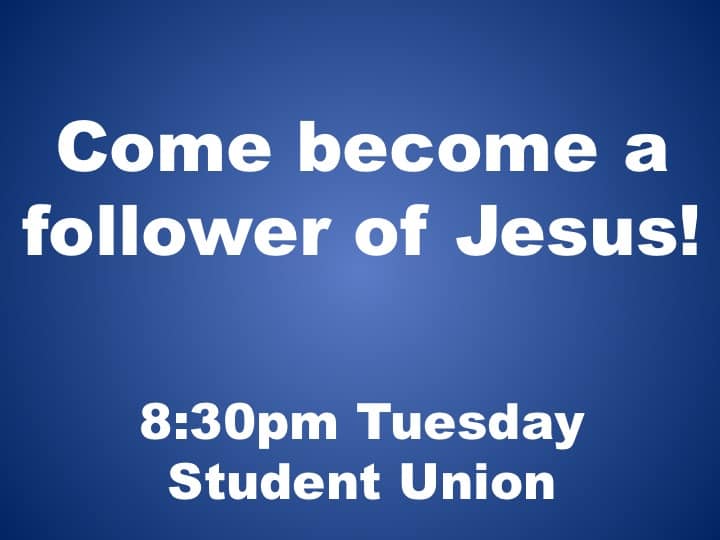
Think about it: why don’t we just put up posters on campus that say “Come become a follower of Jesus – 8:30 – Tuesday nights”?

Why is our lead foot often to “sell” Cru? And is that wrong?


We are unapologetic in wanting to students to passionately promote Cru.

Because we know that through getting involved in a movement like Cru, students will encounter Christ and join His mission to seek and save the lost.


Seth Godin captures this thinking well in his book Tribes. It’s essentially a how-to book on how to create a movement that will change the world. And what is the main ingredient? “Humans need to belong . . . and connect around an idea”.

David Mays has a thorough summary/key quotes from Tribes here


A movement like Cru provides the key ingredient that will get over student’s indifference and/or antagonism toward God: belonging.

Getting swept up in a movement of peers who love and wholeheartedly serve Jesus.

Many students need to belong before they believe.

Dallas Willard echoes this in his thoughts on evangelism: “Many people will be drawn in without any special strategy but simply by the health of the people.”


Seth Godin poses what I think is THE question for horizontal marketing:

“How can we make it easier for people to talk about what they’re up to and what they care about?”


The solutions we’re looking for seem to break down into two categories:

  1. How do we make it easier for them to talk about Jesus?
  2. How do we make it easier for them to talk about Cru?


And I think both are legitimate (and two pretty different) things:

  1. We want to help our students learn, especially in a new world of social media, how to easily share with their friends what is most important to them (Jesus).
  2. But we also want to make it easy for students to passionately persuade their lost friends to join a movement of believers (Cru) where they will encounter Jesus.


So I would love to take on each of these in separate posts in the next few days in hopes that, together, we can figure out how to better accomplish each.

What are you thoughts? What are we marketing- Jesus or Cru? Is there room for both?


Marketing Jesus on the Quad

“P&G To Lay Off 1,600 After Discovering It’s Free To Advertise On Facebook”headline last week

The new age of marketing is great news for college ministry.

Two reasons:

  • Advertising is almost completely free
  • It’s highly dependent on peer relationships

Every year we spend less and less on traditional advertising.

When I first came on staff with Cru we would spend hundreds of dollars on a single ad in the School Newspaper. Even as recently as 3 years ago we invested thousands on yard signs, facebook ads, and posters around campus.

Now we almost exclusively do free “advertising” on Facebook and peer-to-peer word of mouth.

This graphic does a great job summarizing this new era of Horizontal Marketing. It’s well worth clicking to read the full infographic (graphic via @mcryanmac who tweeted “This has very interesting implications for how evangelism on campus moves forward”).

“Horizonal marketing means creating a remarkable product and story and setting it up to spread from person to person.” – Seth Godin


I want to take a few posts and figure out together what this new era of marketing looks like in College Ministry.


Here’s where we’re headed in the next few posts:

1) What are we marketing?

  • Cru (or church or whatever Christian group)
  • or Jesus

2) Applying Horizontal Marketing to College Ministry

  • Using social media for marketing
  • Peer to peer marketing
    • How can we make it easier for students to talk about what they’re up to and what they care about?


Let’s get the ball rolling:

What are some implications you see of how we apply Horizontal Marketing in college ministry?

Texting Encouragement to Students

Just sharing a small idea that’s been a big Win for us recently:

Every week we start our staff meeting with sharing: “How have you seen God at work on campus this week?”. Always my favorite part of the meeting! But we recently realized that most of that good news of God at work is staying within the four walls of our staff meeting.

As we celebrated how God is working, we never took the time to pass on our excitement to the students whom God is using.

So recently we tweaked our schedule a little:

  • After we spend about 30 minutes sharing
  • we praise God in prayer for a bit
  • THEN we spend 10 minutes texting students our team has shared about.

And we make sure that someone other than the staff that’s discipling them (or knows them best) texts them. Hopefully they’re frequently hearing encouragement from their discipler but sometimes it means even more coming from someone else.


An example that I texted to a student this week:

“Hey man. We were just celebrating as a team what God is doing on campus and Jon shared how encouraged he’s been by your passionate perseverance in prayer! So cool that you sacrificially serve in praying for Cru every week (and that you’re leading so many to pray with you)!”


This small investment of time has been huge in helping us be more intentional in encouraging students and saying “what you are doing is significant”.


Would love to hear from you other ideas you have to be intentional in encouraging those you serve in ministry.


photo courtesy of Stephan Geyer


The Motive and Method of Evangelism

Two GREAT posts I’ve come across on the Motive and Method for Evangelism:


The Motive for Evangelism

The first step toward leading people to become evangelists is to lead them to the waters of the Gospel.

If Jesus isn’t good news to us then we’ll never think He’s good news for others

A willingness to speak comes from a heart that is smitten by the only person in the universe worth talking about, and possibly looking foolish for.

When someone becomes a Christian, we make a big deal about it. We announce it on Sundays. . .we announce it on the web . . . we talk about it constantly. Many Christians report never having seen someone become a Christian before coming to our church. It is extremely encouraging for them to see something supernatural like someone “gittin saved.”

In celebrating someone’s conversion, we are celebrating evangelism. People need to know, especially in the Bible Belt, where Christianity is a cultural relic, that the Holy Spirit is alive and well, making disciples and building God’s Kingdom, and that they themselves can be a part of it. This celebration has awakened many to tell others about Jesus for the first time in their lives. Literally, evangelism begets evangelists.

Click to read the entire article.

Application for us (on this last part): at our weekly meeting we’ve started showing weekly videos of students experiencing life change).


The Method of Evangelism

Why you need to learn and memorize a clear way of explaining the gospel. A good apologetic on why you should learn a gospel tract (among other things).

A friend suddenly says to you, “Okay, tell me what this Christianity stuff is all about.” What would you say? Could you explain the gospel clearly in that moment?

Here’s the deal: if you think when the moment finally comes and your friend is ready to listen, that the gospel will flow “instinctively” and smoothly off your lips because, after all, you’ve been a Christian for years, you are wrong! It will come out of your mouth and fall on the floor in a muddled mess.

To be effective witnesses we must work at being able to take what we know in our heads and hearts and clearly express it out of our mouths.

Similar thinking (that’s verbalized in this article) has led me in recent years to a newfound love for the Knowing God Personally tract.

Strongly encourage you to read the entire article.

HT to @pablonunez for tweeting about this article – hooray for Twitter!


What are your takeaways from these two articles?


photo courtesy of . SantiMB .

Be a Barnabas to the Next Paul

I shared this with our Leadership students this last week and I think it was really helpful in clarifying what we want them to accomplish.


Quick background: We’ve noticed that our student leaders are great at doing ministry but not great at recruiting new leaders to join with us (whether that’s to Winter Conference, Summer Project, to our weekly leadership time, or even initiating with new people at Cru).


So we’re seeking to create a culture where Leaders not only do ministry but act as mobilizers.


Kind of like “Teach them how to fish”,

Be a Barnabas” is sticky – it vividly and memorably captures what a leader does.


Just wanted to share for others to be able to use/adapt for their leadership times.

Here’s my notes:

  • Tell me everything you know about Paul [greatest missionary ever, wrote most of the New Testament, persecutor, dramatic conversion, etc.]
  • Now tell me everything you know about Barnabus [not much- the only response from students: “he was an encourager”]
  • Lets read Acts 9:26-31; 11:19-26
    • What did Barnabas do in each of these situations?
    • Barnabas sought out Paul, Barnabas brought Paul to stuff
    • He saw something in Paul that others did not
    • He gave Paul his start and connected Paul to a missional community that eventually sent him out to become the greatest missionary the world has ever seen
  • Paul’s influence/impact far exceed Barnabas’
  • God may have you here at the University of Arkansas, leading a freshman Bible study, to raise up 3 missionaries to Ethiopia. To raise up the next great leader whom God will use to bring revival to this campus.
  • Your job as a leader is to get as many people on the playing field (doing ministry) as possible.
  • To not only lead for Christ but to raise up as many leaders as possible.
  • To be a Barnabas – To raise up the next Paul.

“Sir Humphry Davy was a distinguished chemist of the nineteenth century. When asked late in life what he considered to be his greatest discovery, he replied, ‘Michael Faraday.’

Davy had found Faraday, the ignorant son of a blacksmith, taking notes at his lectures and longing to study science. As Davy began to teach young Faraday, he found a brilliant mind that promised to eclipse even his own achievements. He knew that no one discovery of his could possibly compare with the many discoveries Faraday would make.”

- From Tim Elmore’s book Nurturing the Leader within your child


What sticky metaphors/ideas/phrases do you use to create a missional culture?


photo courtesy of  Lawrence OP

Top Posts of 2011

I started blogging to share. As I stated in my first post:

“Inspired by others who have taken the time to share their thoughts/learnings/resources I thought I would stop mooching and start contributing to the conversation.”

 And blogging has been a better investment than I initially could have imagined. Definitely worth the time.


Especially for those of you in college ministry, I’d encourage you to consider how you could contribute to the conversation in 2012. I’d love to see more staff in Cru sharing – always love to see what other campuses are doing and learning. You can read my recent post,

Shares Well With Others, on CruPressGreen for more thoughts on Sharing.


With that being said, here’s a look back at what were the

12 most popular posts on my blog in 2011:


#1 – Everything you need to know about the Cru name change

  • By far the most visited post of 2011 – more people looked at that post than the rest of the top 12 combined. Still don’t understand what the big deal is re: the name change . . .


#2 – Stuff you can use for your weekly meeting

  • An intro video and music playlist to use at a weekly meeting.


#3 – How to start well with your staff

  • Practical thoughts on what to cover during staff planning


#4 – Should we do more ministry online?

  • Should campus ministers incorporate online presence into our work schedule? Should we ever spend “hot hours” (afternoon hours) online?


#5 – Why you shouldn’t go to seminary

  • Aside from the Cru name-change post, this is probably the post that gets the most google search traffic. Proof that sensationalist titles work  : )


#6 – Vale la pena

  • Is college ministry worth the pain of enduring humiliation and contempt so that hundreds and thousands of future world changers can encounter Jesus?


#7 – 5 Things we want every student to experience

  • Great 2 part guest post on narrowing the focus of what we do with students in discipleship. If you only had 5 appointments with a student, what would you do with them?
  • Part 1  and  Part 2


#8 – How we do ministry

  • A one page summary of how we do ministry on our campus. Our ministry philosophy and what we are seeking to accomplish.


 #9 – The Generation changing the world.

  • It’s an exciting time to be working with this generation of college students. 2 Posts on this world-changing generation:
  • Post 1 – This generation of Millenials (age 10-30) is the largest American generation (larger than the Baby Boomer generation). They and their global counterparts will change the world.
  • Post 2 - The role of young people in changing the world in 2011


#10 – Blogging, Ministry Growth and Ambition 

  • How do you strive for excellence, success, and growth in ministry (and blogging) while remaining humble and God-honoring?


#11 – Planning for Year 2023 – Goals

  • How does having a numerical goal (connected to a long term plan) change things?
    • It forces you to plan differently
    • It gives your staff and students hope/vision


#12 - Raising AND lowering the bar

  • “We’re constantly raising the bar of what it takes to be a leader, and lowering the bar on what it takes to get involved”


photo courtesy of Leo Reynolds

The Leadership Pledge

Continuing a series of posts on putting together a Spring Gameplan. Click to read Post #1 on our Timeline for the Spring and #2 on a couple of shifts we made to better raise up a reaching freshmen team.


One of the most effective things we did last Spring was something we dubbed the Leadership Pledge.

Hopefully it’s helpful, if only for the thorough description of how to set up a good 5 Things Discussion (at the bottom of the post).


Here’s how the Leadership Pledge worked:

  • We had a speaker from the Travelling Team speak at our first Cru of the spring on how God has used college students to change the world.
  • After the talk I stood up and gave a short 3 minute challenge to the effect of:
    • Hudson talked about young people who have been used greatly by God
    • They put their yes on the table
    • This semester you have things pulling for your time and attention
    • Will you allow God to use you in the lives of students around you?
    • Would you be willing to be used by God here at the U of A?
    • Hudson asked the question, “will you be used by God?
    • If you’re willing to say yes to that, please sign your name
    • That you would lead on this campus for God
    • If you sign your name, one of our staff or student leaders will meet with you one on one to help you figure out how you can lead for God on this campus
      • If you have a vision for how God can use you here, we’d love to hear it and help you use your passions for God
      • Or if this is a new idea and you’re still trying to figure out how God is going to use you in your next 2, 3 or 4 years on campus, we’d love to come alongside you and help you figure out your next step.
    • Don’t check it if you don’t want to talk to a staff!
  • We passed out VERY simple cards and gave students a minute in silence to sign if they wanted to.


What we did for follow up:

  • We trained staff and key student leaders in how to use the 5 Things – what to say to start the conversation (after small talk), what parts to emphasize, what questions to skip, etc (for more on that, I included detailed notes at the bottom of the post)
  • We made a Google Doc with all who signed the Pledge and let trained student leaders and staff assign themselves to follow up with students
  • We set up 1on1 appointments with every student who signed. Ideally, we take a student we’re discipling to do the appointment with us (Because we want to connect these students to other key leaders. So it will be 2 on 1)
  • The Goal of the appointment – Give them vision for living missionally using the 5 Things pamphlet and find out where they’re at in regard to that
  • Actions Steps  –
  • If you discern that they’re not ready to lead (spiritually, socially, maturity, etc) – Strongly encourage them to get in a Community Group where they can grow (help them find a group that works for them)
  • If they could be a Key Leader:
    • Job 1: Get a 2nd appt with them
    • Job 2: Use your discernment as to the next step.  You’re options (in order of priority):
      • Get them on Leadership Retreat (say, “I’ll bring you next week”)
      • Invite them to Leadership Hour (say, “I’ll bring you next week”)
      • Invite them to M29 Evangelism-Track


A couple notes:

  • We intentionally didn’t put Cru anywhere on the Pledge card nor did we push Cru when we met one-on-one. We really hope to be able to help students connect with God’s mission, not ours.
  • The 5 Things is really good at setting up all that Cru offers.
    • For example, it clearly communicates the need for equipping. “So you want to be equipped? We just happen to do a weekly equipping time on Tuesday nights you should check out!”
    • It keeps a Kingdom focus and then we offer Cru as a solution to helping students make an impact for the Kingdom, which is exactly our role. Getting “plugged into Cru” is not the end, but a means to an end- equipping and mobilizing laborers for God’s glory.


Here’s what we did to equip our staff and student leaders to lead a 5 Things Discussion (I think this is pretty helpful):

  • The 5 Things is a pamphlet designed to help students figure out what it would look like for them to have an impact for God on campus and for the rest of their life
  • Click to view the trainer’s guide on Facilitating 5 Things Discussions
  • Don’t have an appointment until you read thru the trainer’s guide and are comfortable going thru it
  • The best way to open the conversation (included in the guide):
    • “I’d like to go over 5 key principles that when applied to your life help you figure out what it would look like for them to have an impact for God on campus. And not only that but I believe these 5 things lay the foundation for knowing and serving God for a lifetime.”
    • Before you get into The 5 Things, talk about Surrender (there’s a how-to on that in the Guide). I would use the verse – “you are not your own – you have been bought with a price” I Cor. 19-20 and ask some of the questions from the guide
    • Before you get into the first Thing – Kingdom Vision, I would steal some of the content from the Discipleship Challenge and ask:
      • Before we get into our vision for our lives, what do you think is God’s vision for our lives as believers?
      • His final words on earth are found in Matt 28:18-20 – let’s look at that
      • That is God’s will for all Christians that they would spend their life making disciples of all nations
      • So any plan we have for our lives needs to fit into this greater plan

Shifts in Focus in the Spring

part 2 of 3 in a series on Spring Ministry – click here to read posts 1 & 3

Yesterday I shared our Spring Timeline – our game plan for the entire spring semester.

The conviction behind it is this: The spring is the time to get your “reaching-freshmen-team” together and everything you do in the spring should contribute to assembling this team of leaders.

So last year we took a hard look at our spring and thought through what we needed to drop and what needed to add so that when August rolled around we would have a huge team of equipped students who want to invest themselves in reaching the freshmen class. Increasing our leadership base both in quantity and quality.

So here’s some changes we made in terms of:


Quantity

We stopped passing out FSK’s in the first week of the spring. I may get kicked off Cru staff for saying that. FSK’s are a Cru staple- a laundry bag filled with a Bible, a book, and some other swag- that we pass out in order to do spiritual interest surveys and generate new contacts.

  • But Staff and student leaders have limited time. And we decided that we could either invest our first 3 weeks of the spring in following up FSK contacts OR spend our first 3 weeks surfacing the next generation of leaders. It’s definitely a tradeoff.
  • But we have a semester worth of new people who attend our weekly meeting. Instead of running around crazy trying to turn over new rocks, why not invest heavily in those who are already in our ministry.
  • I’ll share tomorrow one of the primary things that helped us surface that next generation of leaders – the Leadership Pledge.


Quality

In thinking through what new CG leaders have to be good at, we arrived at this:

  • Primarily they need to be good at doing follow ups and initiating with freshmen. They need to be gospel pursuers. And we’d love for them to be adept at this before the craziness of the first weeks of the fall
    • So during the second half of the spring, we committed to taking every new Community Group leader (who will be leading a study in the fall) out to share their faith at least once (preferably twice).
  • Second, they need to know how to lead a study
    • We required all new Community Group Leaders to take a 5 week course- “How to Lead a Bible Study”
  • Third, they need to be good leaders
    • We implemented an application to lead and a one page leader expectation sheet
    • Staff interviewed every applicant one-on-one and had hard conversations with those who may not be quite ready to lead a study
The result?
Last spring was we doubled the number of Community Group leaders compared to the year before (without sacrificing quality) which has resulted in a lot more freshmen’s lives being changed this fall!


What do you think about staff focusing on raising up laborers the first 3 weeks of spring instead of a more outreach focus?


photo courtesy of ihtatho

Money to Fund the Mission

Mark Driscoll tweeted this weekend about a video in which he describes THE game changer in the history of Mars Hill.

A single thing that took them from 40 people to 800. A turning point that made the difference between their church shutting down and being the global influence that it is today through the Acts29 Network and Mark Driscoll’s teaching.

It wasn’t hiring a key staff. Putting on a big outreach. Giving a great sermon. Getting a new website. Him yelling at a bunch of men (that was a different video).

It was money.

A gift from a generous couple – a $200,000 gift that was 100x greater than any gift they’d ever received.

As ministry leaders we spend countless hours thinking through how to reach more people with the gospel. We plan ways to raise up new leaders. Get excited about new books/ideas that could be gamechangers. Dream of new websites that will singlehandedly reach the campus with the gospel. But we rarely think of money.

We just finished a week of planning and money didn’t come up once. I like to think that we can just suck it up and make do with what we have. I rarely, if ever, think “if we had all the money we needed, what would be the most effective way to reach this campus?”


Bill Hybels in his book Courageous Leadership calls the lead pastor (and in my case Campus Director) the CRR (Chief Resource Raiser).

He recalls when he first realized the necessity of money to fund the mission: “my romance with the notion of building an Acts 2 church had blinded me to the harsh realities of funding one.”

He goes on to say:

Theologian RC Sproul once asked me how much ministry I thought I could do for a hundred bucks. I assumed he was hoping for some deep theological response, but before I could think of one he answered the question himself, “You can do about a hundred dollars worth.” He was simply making the point that a fruitful ministry requires resources.

Be as theological as you want to be, but the church will never reach her full redemptive potential until a river of financial resources starts flowing in her direction. And like it or not, it is the leader’s job to create that river and to manage it wisely.


I just wonder what would change if our ministries and staff were abundantly funded. Imagine what God could do.


photo courtesy of Sprengben


Page 1 of 212»